August 25th, 2009

Rollo & Grady Interview // Scott Avett

Rollo & Grady Interview // Scott Avett
Scott Avett – Image by Crackerfarm

The Avett Brothers put on an amazing show last Wednesday in Telluride – part of the Sunset Concert Series held in Mountain Village. Most of the shows this summer have been well attended, but the crowds are usually pretty mellow. Not so last Wednesday. The Avett Brothers rockin’ performance kept the audience on their feet dancing for most of the 1 hour and 45 minute set. The Brothers played a couple new songs from their forthcoming album, I and Love and You, set to drop on September 29th, and some tracks from their previous albums: A Carolina Jubilee, Emotionalism, Four Thieves Gone and Mignonette. They also performed a fantastic cover of the Flatt and Scruggs’ classic, “Til the End of the World Rolls ‘Round.”

The Avett Brothers are playing The Orpheum Theatre on Saturday, September 5th (buy tix).

Rollo & Grady Interview // Scott Avett
Images by Merrick Chase Telluride Photography

I caught up with Scott Avett after their set before the Brothers rolled down the valley towards Steamboat. He was amped from a great show and all smiles as he took a few minutes to answers some questions about their new gig with Columbia and working with Rick Rubin.

R&G: How has it been working with a major label – Columbia?

Scott: It’s been nothing but fuel to the fire. Their whole take has been ‘We don’t need to fix anything that isn’t broken.’ They’ve done nothing, but add value and give us the ability to do more as band. And that’s what we were looking for when we signed with them. It didn’t hurt having Rick Rubin produce the album (laughs).

R&G: Speaking of, what was it like working with Rick Rubin?

Scott: He’s unintrusive and very adaptable. We tried a lot of things on this album that we wouldn’t have normally tried. And if you haven’t tried it, then you don’t know. Before, we would just nail it and that was it. This has been a wiser way to work, and when you have a guy like Rick Rubin, the wisdom just pours out of him.

R&G: So you guys have said that this album is more complex and refined…

Scott: I think lyrically there aren’t as many parts, as say on our last album, Emotionalism.

R&G: Did you guys bring the high energy from your live shows into the studio for this album?

Scott: Some. The second to last song that we played tonight (“Slight Figure of Speech”), that’s one of the highlights on the new record. But we slowed it down in the studio to showcase the lyrics.

Rollo & Grady Interview // Scott Avett

R&G:
How did it feel to be named “Artist to Watch” by Rolling Stone Magazine this month?


Scott:
Oh, I don’t know man (laughs). I always say that, that stuff – if it comes that’s good. It seems like with Rolling Stone or Creative Loafing, as soon as you stop caring, they start caring. And to us it was kinda like, you know what… if we’re gonna get in there, then they’ll come to us and we’ll get in. And finally we did. But by that time, it was like – that’s great, but it’s not gonna to change the roll of everything we’ve already got going.

R&G:
How do you like playing in Colorado, and in Telluride tonight?

Scott: This is amazing… amazing – this place is sick. Absolutely sick.

R&G: So, what’s next?

Scott: You’re seeing it. It’s the touring, we just keep doin’ it. We’re gonna tour ‘til Halloween, take a little break and then we’re heading overseas.

R&G: Where are you guys going overseas?

Scott: Everywhere.

R&G: Scott, thanks for the time, anything you want to add?

Scott: Yeah. Our new album is coming out on September 29th.

Rollo & Grady Interview // Scott Avett


June 30th, 2009

Rollo & Grady Interview // Sam Spiegel of N.A.S.A.

Rollo & Grady Interview // Sam Spiegel of N.A.S.A.

Sam “Squeak E. Clean” Spiegel has an impressive resume. He’s produced albums for the Yeah Yeah Yeahs and Ben Lee, scored commercials for Adidas and Levi’s and composed soundtracks for David O. Russell and Spike Jonze. These days his primary focus is N.A.S.A. (North America/South America) – a musical collaboration between Spiegel and Zé “DJ Zegon” Gonzales. Over a 5-year period the duo have enlisted the services of music heavyweights David Byrne, Chuck D, RZA, the Yeah Yeah’s Karen O, Tom Waits, ODB, George Clinton and many others to contribute vocals to their debut album Spirit of Apollo. The goal of the album is to “bring people together with music.” A perfect example is the pairing of Tom Waits with Kool Keith on the track “Spacious Thoughts.” The fact that they got the reclusive Tom Waits to join the project, speaks volumes to the effort they put into this record. They are also adding the finishing touches on a documentary chronicling the making of the album.

I spoke with Sam by phone last week to discuss the project, the ones that got away and intergalactic loving.

Rollo & Grady Interview // Sam Spiegel of N.A.S.A.

R&G: How are you doing?

Sam: Lovely. Just getting some stuff done while I’m back in town on break.

R&G: Were you in Brazil?

Sam:
Yeah – I just got back yesterday.

R&G:
Was it crazy?

Sam: It was crazy, man. Brazil is always crazy. People definitely have a lot of fun there.

R&G: That’s cool. You’ve mentioned that James Brown was one of the guys you really wanted to work with on the
Spirit Of project. Who else was on your wish list that didn’t make it on the album?

Sam: So many people. David Bowie, Lou Reed, Tom Yorke, Damon Albarn, Al Green, Morrissey, Mos Def, Andre 3000, Jay-Z, Nas, Rakim, Björk. There are so many people.

R&G: Did you reach out to Q-Tip or Kool Moe Dee or Schoolly D? Any of those guys?

Sam: Q-Tip was actually almost on the record, but it didn’t end up working out.

R&G: Were there red tape issues with the other guy’s labels or just conflicting schedules?

Sam: Some people politely declined. David Bowie said, “I really like this, but it’s not for me.” I think he said, “It’s not my cup of tea.”

R&G: I hear that Lou Reed is notoriously difficult. What happened with him?

Sam: He just wanted an insane amount of money we could have never afforded, so unfortunately we couldn’t do it with him.

R&G: Were some of the artists working for free?

Sam: Yeah. Some guys were nice enough to lend their services just because they loved the project. That was awesome. We hooked people up with as much as we could, but it was great to see people just volunteering their services because they were inspired.
Rollo & Grady Interview // Sam Spiegel of N.A.S.A.


May 6th, 2009

Rollo & Grady Interview // George Howard

Rollo & Grady Interview // George Howard

In his 20-plus years in the music business, George Howard has been a musician, author, educator and producer. In 1993, while in graduate school, he founded the Slow River Records label. Slow River eventually merged with indie powerhouse Rykodisc (Morphine, Medeski, Martin and Wood). In 1999, George became president of Rykodisc, where he signed and/or guided the careers of Robert Cray, Tom Tom Club, Josh Rouse and many others. He also developed the Rycodisc catalog of holdings.

Howard has contributed to the start-up of TuneCore.com and works closely with Wolfgang’s Vault and Daytrotter. He is both the current Vice President of Artists House Music Foundation and Editor of ArtistHouseMusic.com. Howard is also a professor and Executive in Residence in the College of Business Administration at Loyola University and a professor at Berklee College of Music’s online program. He has written two books for Berklee Press, “Getting Signed! An Insider’s Guide to the Record Industry” and “Music Publishing 101,” and is now working on his third, “The Artist’s Dilemma… and a Way Forward.”

Rollo & Grady Interview // George Howard
George with his daughter Annabelle

R&G: What are your thoughts on the current state of the music business, in terms of the new business model, digital distribution, digital downloads and do-it-yourself musicians?

George: It’s a time of optimism and excitement for me, both from the standpoint of being entrepreneurial and working with artists. There’s a larger cultural thing that is going on. The days of creating something and then handing it off to some larger entity or larger company to market, promote and distribute are over for the most part. Digital distribution has created a place where you can efficiently go from content creator to constituents without handing it off. With that ability comes a whole host of challenges that are reshaping the nature of creative output, for good and bad. The good part is that it’s forcing people to be entrepreneurial and understand some business practices and things that can help them succeed. The bad part is that it’s forcing them to do those things and not be able to devote their full energy to creating. Most people were never able to devote their full energy to creating anyway. It does provide cognitive dissonance when you are the creator as well as the businessperson. The only way it succeeds is by leveraging efficiencies largely brought about by technology. It’s an exciting time, but it is certainly not a time without challenges. We hear a lot about emerging middle classes of artists, which I like and believe to a degree. But what’s being forgotten is that there is a base of knowledge any businessperson needs to understand or acquire to succeed in business, whether a restaurateur or a musician.

R&G: Apple recently hit their billionth mobile application download. What is your opinion on the music business moving into the mobile space?

George: The App store is no different from iTunes in some respects, except for that the smart people are using the applications. Hugh Macleod, who has a great blog called gapingvoid.com, throws around this term “social objects.” I’m stealing it from him, and he borrowed it from somebody else. It’s a term that’s been around forever, but he writes very eloquently on it. The smart companies using these apps as social objects to connect to something greater – such as Pandora – are pushed over the edge to success. Bands need to do the same thing with their music. This last day or so, there’s been a lot of talk about how now that the variable pricing has gone in on iTunes and the tracks are being sold for $1.29, sales have dropped off. There is an elasticity of demand going on there, and what people are failing to realize is that these are just social objects. Whereas the CD or maybe the download was seen as being it, now they are the means to some other end, and that end is really leveraging these social objects, the songs, whatever you want to call them, as a way to give your constituency – or as Seth Godin would say, your tribe – something to rally around.

R&G: Terry McBride has been discussing cloud-based servers. Will they be a reality sooner than later, if consumers think downloading is a hassle?

George: Probably. We’re in a time of constant productivity, where you can upload your entire library of music and then access it from any PC, Mac or online computer. There are services out there such as Lala that are doing that right now. The moment they release an iPhone app to access your collection in the cloud, then it’s a very easy segue to, “Okay, you have these songs in the cloud, complete your collection or use preference engines or whatever to get you to the next logical musical choice.” Then the transaction is seamless. Your credit card information is already entered in, the music is already there, and you just click OK. Lala’s onto something. They’ve gone through various business models, but this one makes sense, and it’s very much a cloud-based approach. I don’t know all the back-end licensing they’ve had to go through to make this do-able. They do need the iPhone app, and that would put them over the edge. There may be issues on the licensing side with that.

Rollo & Grady Interview // George Howard


April 10th, 2009

Rollo & Grady Interview with Tyler Ramsey – Band Of Horses

Rollo & Grady Interview with Tyler Ramsey   Band Of Horses
Image – Christopher Wilson

I read early last year that singer-songwriter Tyler Ramsey was asked to join Band of Horses. My first thought was how lucky Ben Bridwell and company were for landing such a talented artist already on the rise.

Don’t get me wrong – Band of Horses is one of my favorite groups, but Ramsey had just released his critically acclaimed album, Long Dream About Swimming Across The Sea, which showcases his distinctive finger-style acoustic guitar play and folksy, bluesy, mellow vocals. The addition of Ramsey to Band of Horses will propel them to the next level and adds another incredible writer to the sextet. For now Tyler is feeling out his place with the band taking a low-key posture on stage.

I asked him about the new Band of Horses album, including whose songs made the cut, release date and the title. He didn’t have any answers; he wasn’t being evasive – he simply didn’t know. I hope to find out more in the weeks to come.

Tyler and the rest of the band are preparing for their upcoming shows in California, but he took the time to answer a few questions.

Band Of Horses Tour Dates (Click Here)

Rollo & Grady Interview with Tyler Ramsey   Band Of Horses

R&G: 2008 was a surreal and stellar year for you. Long Dream About Swimming Across the Sea was one of the best albums that year and joining the super-talented Band of Horses. Can you describe how you felt about your good fortune?

Tyler: I was already really excited about how the year was shaping up when I joined the band. It turned out to be the busiest year I can remember. Tons of traveling and touring with what are now my best of friends, lot’s of new places and really great shows!

R&G: You’re from Asheville, NC. What role did nature play in your music?

Tyler: I had a lot of time on my hands when I was writing those songs and I lived in a really nice log cabin where I could pretty much make as much noise as I wanted. It wasn’t way out in the sticks or anything, but it felt secluded. I think that helped a lot, just having the space and a big porch I could play guitar on while not staring at someone else’s house.

R&G:
Did you have any idea how well the album would be received?

Tyler: No- I still don’t. It did get a lot of really nice write ups and there were some folks I talked to that really connected with it.

R&G:
How did you hook up with Ben and open for the band?

Tyler: I met him in Echo Mountain studio in Asheville. The band was working on Cease To Begin.

R&G: Is it true that during a late night of tequila drinking that Ben asked you to join the band?

Tyler: Hmmm… I don’t recall.

R&G: You’re an outgoing guy, so why are you so mellow on stage?

Tyler: I am actually not the most outgoing person. I spend a lot of time with guitars. I do a lot of crazy antics on stage, but I move so fast it’s hard to see them. Lot’s of jumps, kicks and other things.

R&G: Are you working on solo material?

Tyler: I work on new songs all the time. I really hope to be ready for the studio later in the year. Our touring schedule is not as crazy this year – at least not yet – so I will be able to find the time. I am at the point now where I am starting to get it together in my head; different sounds and abstract ideas about what it will be.


April 8th, 2009

Rollo & Grady Interview // Stuart Bogie of Antibalas

Rollo & Grady Interview // Stuart Bogie of Antibalas

Stuart Bogie is one of the busiest people in the music business today. He’s a producer/composer, and studied music at the Interlochen Arts Academy and the University of Michigan.

Bogie has either recorded or performed with TV On The Radio, Gomez, Burning Spear, Medeski, Martin and Wood, Yeah Yeah Yeahs, Sway Machinery, Wu-Tang Clan and The Roots to name a few. He’s also a member of Volney Litmus, Anitbalas and Superhuman Happiness, but his main gig is with Afrobeat super-group Antibalas.

While playing with each of these groups Bogie moves seamlessly between instruments playing the clarinet, bass harmonica, tenor and alto saxophones, keyboards and electric bass. Bogie maintains a relentless tour schedule and is a must see whoever he’s playing with.

Antibalas (Stuart is in the red shirt on the left side)
Rollo & Grady Interview // Stuart Bogie of Antibalas

R&G: How many different instruments do you play?

Stuart: Comfortably – maybe five or six. It’s easy to get along between woodwinds, so if you play the tenor, then you can get along on the alto and the bari sax. If you play clarinet, you can get along on the bass clarinet, and the flute comes in there.

R&G: Is Antibalas on hiatus?

Stuart: Yeah, Antibalas is taking a break right now. We did a couple gigs last year and the beginning of this year.

R&G: Antibalas is your primary band, correct?

Stuart: Yeah, I’d say that’s my main thing. That and Superhuman Happiness and The Sway Machinery. I’ve put a lot of time into that too.

R&G:
Going back to Antibalas – when I saw you guys play for the first time, it was in the Washington Mutual tent at Austin City Limits. Can you tell me about what you guys felt and were thinking before that show and during?

Stuart: We’ve always wrestled with the issue of corporate sponsorship; it seems like our lives are corporate sponsored. You can get a free pair of shoes if you let the shoe company have a banner at your merchant thing, or you can use your band to support this cause or that cause. There are always issues of endorsing and how it happens; we always wrestle with it. It seemed poetic and ironic in several different playful ways that the tent that we were under – I guess metaphorically and literally – was run by a company that was collapsing and has now been bought out, and eaten by another. I don’t know what that changes for anybody. All of it’s just interesting. I wish I could be more poetic about it.

R&G:
You contributed to several songs on last year’s TV On The Radio album,
Dear Science. Are you going to join them at Coachella?

Stuart: I think I’m going to play with them. That’s my plan, but I’m not sure of anything until I’m there.

R&G: Do you just wait for their call?

Stuart: We’ve talked about it and I’ve got the date in my calendar, but I’m never sure if a date is certain or not – never. People cancel all the time, and the last person to find out is a sideman. With TV on the Radio, even though I’ve done some arranging for them and put in some creative energy, I’m just a sideman.

R&G: But even as a sideman, you played the entire
Dear Science tour with them.

Stuart: I did the U.S. I didn’t do Europe or Australia.
Rollo & Grady Interview // Stuart Bogie of Antibalas


March 4th, 2009

Rollo & Grady Interview // Terry McBride

Rollo & Grady Interview // Terry McBride

Terry McBride is the CEO and Founder of the Canadian music label and band management firm Nettwerk Music Group. Founded in his apartment in 1984, Nettwerk currently has offices in Vancouver, New York, Los Angeles, Boston, Nashville, Hamburg and London. The growth and success of the company is attributed to McBride, one of the brightest visionaries in the music business today.

In 2002, McBride saw the rapid changes taking place in the industry and decided to get out of the physical delivery side of the music business. At that time, he said, “The future of music isn’t selling records. It’s selling music in every form imaginable.” As a result, he shifted the company’s focus to the Internet and digital distribution in order to market his clients’ music. Those changes have paid off. While other labels are now struggling to move into the digital space, Nettwerk is steadily growing its revenues, with digital comprising 80% of the company’s income.

Rollo & Grady Interview // Terry McBride

R&G: What made you decide to focus your business on digital products versus physical ones in 2002?

Terry: It was an intuitive thing for me. Obviously, digital had been seeping into our world for about three years and the Napster effect was apparent. Being a small company and working directly with artists, we could really hear and see what was starting to happen. It was a realization that fighting it wouldn’t work; understanding it and being able to grow it was what was going to work. It was a psychological shift for us. It took a few years to get the rest of the company and analysts focused towards that, but that was the psychological shift for me, which means that the company shifts.

R&G: About 80% of your business is from digital sales now, right?

Terry: Yes, that’s correct.

R&G:
Why did you drop DRM in 2003?

Terry: I didn’t see any purpose in locking down files; it made no sense to me. People have always been sharing music. Why would I want to stop them? Why would I want to tell them what to do? The way to win was to get them to support my artists, not to force them to do it a certain way. I know I wouldn’t like anyone telling me that.

R&G: You recently spoke about cloud-based servers, mobile applications and smartphones being the future of the music business.

Terry: What’s happened in the last ten years is kind of moot. The next 18 months will determine the future of the music business. It’s a situation where the turnover on phones by the average consumer – now I’m being generous here – is every two years. It’s probably shorter. The smartphones that are starting to dominate the marketplace are specific platforms now open to applications that are being developed outside of the R&D departments of all of the various carriers. Apple, when they opened up their App Store, I think they sold, what, 150 million apps in maybe 9 months. It stunned the world, and Apple is a small player. They might be a noisy player, but they’re a small player within the mobile space. Research In Motion launches their store this month, Nokia is launching Ovi in April and Google has already launched their Android site. You’re going to see millions of applications come onto the marketplace. You’re going to see social filtering of the really good ones, and what’s going to be in there are applications that change the behavioral habits of how you consume music. The need to download music will no longer exist. If anything, it will be a hassle. You’ll have smartphones that can probably handle two to three hundred songs. That’s a gradual download; you’re actually not streaming it. It’s actually on your phone but it’s pulled from some sort of server, whether it’s your own server or a cloud server. To make all of these applications work, you have to have really good metadata, which means that business has to focus its efforts on really good metadata. Rich metadata is going to work with all of these applications. You’re going to see digital maids, digital valets. You’re going to see applications for maybe five bucks a month where you can access all the music that you want, how you want it, when you want it, imported to any device. So why would you want to download? Why would you want to go online to try to find it for free? Besides, something you find free might not work with these smartphone apps. Five bucks is no big deal to have unlimited access. That’s where everything’s going. All of the current arguments and debates are moot. I would even say that the ticker has now started on when the iPod goes away. I think Apple saw that.

R&G: So their primary focus will be to promote the iPhone?

Terry: They’ve been pushing the iPhone more than anything, and when they opened up their App Store, their intuitions were proven right. It is the App Store that has driven iPhone sales.
Rollo & Grady Interview // Terry McBride


February 9th, 2009

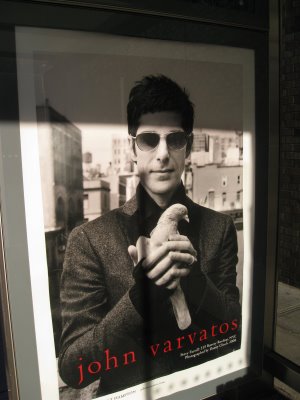
Rollo & Grady Interview // John Varvatos

Rollo & Grady Interview // John Varvatos

John Varvatos has successfully blended his lifelong love of music with his fashion career.

He cut his teeth in the fashion industry in 1983 with Polo Ralph Lauren. In 1990 he moved over to Calvin Klein, where he launched their menswear line. For the past several years he has held key design and marketing positions with Polo, London Fog and Nautica. In 1999, Varvatos started his eponymous company, debuting his first clothing line for Fall/Winter 2000. He has received numerous honors from the Council of Fashion Designers: 2000 New Menswear Designer of the Year, and 2001 and 2005 Menswear Designer of the Year. In 2007 Varvatos was named GQ Magazine’s Designer of the Year

John credits rock ‘n’ roll for his early interest in fashion. His first fashion/rock campaign featured Ryan Adams in 2005. John has since showcased in his campaigns Joe Perry, Iggy Pop, Chris Cornell, Alice Cooper, Velvet Revolver and Cheap Trick.

I recently caught up with John to discuss the new happenings with his company, 315 Bowery, which opened in the former CBGB’s, as well as who’s playing this year’s Stuart House event.

Rollo & Grady Interview // John Varvatos

R&G: 2008 was a busy year for you. Can you tell me a little about it?

John: Well, we opened up three new stores – the Bowery in April, in the old CBGB’s location, San Francisco in May, and Malibu in September. So we’ve had three openings, a fragrance launch and a lot of new, exciting things happening with the company. It’s been a very busy year for us all the way around.

R&G:
You generated some controversy when you opened up the store in the former home of the famed music venue CBGB’s. Tell me about that experience.

John: We definitely had some controversy when we announced that we were taking the space. It had been empty for over a year-and-a-half before we leased it, so it wasn’t like we forced anybody out. There were a handful of protesters the first few days we opened, but the controversy went away very quickly. Even The Village Voice was surprised at what we executed in the space. Most of the music world came out and supported us, including a lot of musicians that played there – members of Blondie, the Dictators, Little Steven and C.J. Ramone. We don’t use the name CBGB’s anywhere and we don’t imply that the store has anything to do with it, but we do our best to honor the past. We have a permanent stage set up with an amazing P.A. system, and the first Thursday of every month we have a free concert to promote up-and-coming artists that have a hard time getting labels behind them or the labels don’t give them the money to get out there. We support this through our artist development fund. And all the kids who work in the store are musicians.

R&G: You sell vinyl and memorabilia there, so you consider it a concept store. It’s a lot different from your other locations. How have people reacted to the combination of merchandise?

John: The original protesters complained about how expensive the items are. The reality is that although there are some expensive things, there are inexpensive things, as well. Fashion has always been a big part of the history of rock and roll. A lot of people are interested in the way bands dress and what they look like in their videos and album covers. We haven’t tried to exploit it, but I still have to pay the rent, so I have to sell things. And I want CBGB’s, its history of being a place for artists to get their start, to somehow remain in New York City. That’s why I use some of my profits to support up-and-coming artists. The reason you have your blog is exactly the reason I have that store. Would I love to own a club? Yeah. But for right now, this is what I’ve got. You don’t have to pay to come into the store. You can spend two hours just looking at all the memorabilia and the original walls from CBGB’s, and nobody is going to bug you. It’s like a museum in that way.
Rollo & Grady Interview // John Varvatos


February 5th, 2009

Rollo & Grady Interview // Seth Godin

Rollo & Grady Interview // Seth Godin

Business Week has called Seth Godin “The Ultimate Entrepreneur for the Information Age.” He’s the author of 10 international bestsellers and is considered the top marketer in the Digital Age. His e-book Unleashing the Ideavirus was downloaded more than 2 million times before it was published. And his blog is consistently ranked one of the top 20 in the world by Technorati. Through his writing and speaking, Seth has changed the way people think about marketing, change and work.

Seth graduated from Tufts with majors in Philosophy and Computer Science and received his MBA from Stanford. In 1992 he founded Yoyodyne, one of the first online marketing companies. He sold Yoyodyne to Yahoo! in 1998 and became its VP of Direct Marketing.

In 2005 Godin founded Squidoo, a free, interactive, easy-to-use site allowing anyone to create pages (called lenses) about topics in their expertise.

I recently caught up with Seth to discuss his latest book Tribes and how its concepts apply to the music industry.

Rollo & Grady Interview // Seth Godin

R&G:
What’s your take on the state of the music industry today?

Seth: The music industry is really focused on the ‘industry’ part and not so much on the ‘music’ part. This is the greatest moment in the history of music if your dream is to distribute as much music as possible to as many people as possible, or if your goal is to make it as easy as possible to become heard as a musician. There’s never been a time like this before. So if your focus is on music, it’s great. If your focus is on the industry part and the limos, the advances, the lawyers, polycarbonate and vinyl, it’s horrible. The shift that is happening right now is that the people who insist on keeping the world as it was are going to get more and more frustrated until they lose their jobs. People who want to invent a whole new set of rules, a new paradigm, can’t believe their good fortune and how lucky they are that the people in the industry aren’t noticing an opportunity.

R&G: Are you saying that the technology players like The Hype Machine, Last.fm, MOG or Pandora are taking advantage of the new paradigm?

Seth: I would go to even smaller places. I would talk about the folks who started CD Baby. I would talk about musicians who are making a great living leading a small tribe – 1,000 true fans connecting directly with each other, leaving out many layers of middlemen. I would talk about powerful musicians like Neil Young who are moving things in one direction, versus powerful musicians who are just sitting back and watching the whole thing fade away.

R&G: Can you give an example of a powerful musician or a super-group that’s missing the boat?

Seth: We saw both Metallica and AC/DC take interesting paths when it came time to figure out how to generate new generations of fans, when it came time to play with distribution, etc…

R&G: Going with Best Buy or Wal-Mart?

Seth: Yeah. A Wal-Mart deal seems really sexy, but you’ve got to figure out who you are reaching and what is it doing for you in the long run. Suing your fans is an interesting approach to maintaining the status quo, but there’s no evidence that it leads to long-term benefits. There are musicians who are reaching out and building fan bases and then there are those who are fighting the other direction. I went to see Ricky Lee Jones live in New York City a couple months ago. At the end of the concert they stood up and said, “If we get your email address at the front of the room, we will email you a live recording of tonight’s concert when it’s ready.” 72 hours later, there it was. The idea that you could have a micro-market of 250, 500, 1,000 copies of a CD every night is a totally different way of thinking about what you do for a living, rather than making one album a year marketed with payola and promotion that reaches a certain group of people and ignores everybody else.
Rollo & Grady Interview // Seth Godin