February 15th, 2009

Rollo & Grady Interview // Anthony Volodkin

Rollo & Grady Interview // Anthony Volodkin

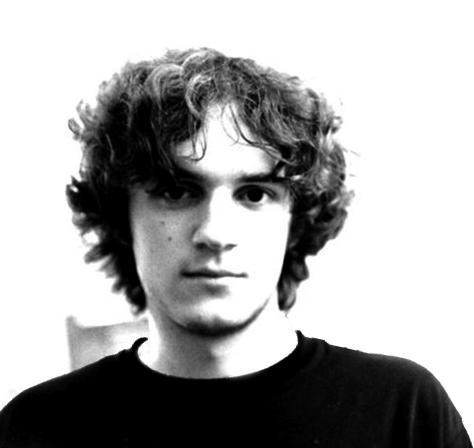
After many late nights browsing the Internet and music blogs for new music, Anthony Volodkin started work on his first incarnation of The Hype Machine. He launched the beta version in April 2005 from his dorm room during his sophomore year at Hunter College in New York City. Almost four years later, the site now generates 1.5 million unique visitors per month and serves as an aggregator for more than 1,500 music related blogs.

Anthony has paired his love of music and computer science background to create what has become one of the foremost filters for MP3s on the Internet. He designed the site to create an unbiased voice for people who want to discover new music. Anthony is now poised to be a major player in the new music business world.

I recently talked to Anthony about the future of The Hype Machine and where he sees the music industry headed.

R&G: What inspired you to start The Hype Machine in April 2005?

Anthony:
The Hype Machine came about from a personal need to find new music. I reached a point in my life where I had not heard anything new. I was familiar with the music that my friends were listening to and things I’d listened to for some number of years. I didn’t know where to find something interesting from a voice that I could listen to and trust. There wasn’t a magazine for me. The content in magazines was all a result of relationships and deals or some other arbitrary connection people had and not so much about the music. New York radio was not that good either, so I didn’t know where to start. I ended up stumbling onto music blogs. I browsed the web and was surprised that people were posting music files and writing about them just because they liked them. It was just what they did for fun. Over the course of a few weeks, I kept staying up late and finding more and more of these sites. I felt there had to be a way to get more access to all this activity. It felt genuine, like hundreds of people were doing this. If combined in some way, this could be the voice I was looking for, the voice that I could resonate with and trust. That’s how the first version of the site came about. It was a tool I made for myself, but it didn’t stay private for long.

R&G: You were still in college when you developed The Hype Machine. How old were you?

Anthony:
I was 20 years old, and attending Hunter College in New York.

R&G: Did you ever imagine that at age 20 you would create an application that could index hundreds of music blogs?

Anthony: I wish I could say I did, but I wasn’t really thinking about that too much. It was more about creating immediate value, and that’s what I focused on most. We have these couple hundred blogs, so how do we present the information that’s going through them in a way that gets people to listen and discover the writers and music together?

R&G: How long had you been programming before you started the application?

Anthony: I was a computer science major and worked in a local New York IT consulting firm, fixing servers and maintaining networks. I definitely have a programming background, but in some ways The Hype Machine was a learning process. Learning how to build web apps was definitely a big part of the process. That’s also what made it more interesting.

R&G: Did you have any help? Any mentors?

Anthony: In the beginning, I just did it. I didn’t talk to many people about it. I just thought the most direct way to get what I wanted would be to start building it and then other pieces would fall into place.

R&G: Did you think you could generate revenue with the site?

Anthony: Well, the hope was that other people’s needs would resonate with what I was building. I also thought it would be able to make money by selling CDs through Amazon and other sources in a typical affiliate system. I obviously didn’t know as much about all that as I do now, but it seemed like a potential way to monetize it. Everything turned out to be much more challenging than I expected.

R&G: What’s a typical day like for you?

Anthony: Hmm. Usually it’s a vibrant mix of many things. There’s usually quite a bit of emailing. Sometimes I talk to the other guys on the team about the products they’re working on. Other times I just build things because I’m still the chief developer of the app. I go to meetings with people who are working on something related to music on the web. It varies. We don’t have an office, so currently I work from home.

R&G: How many unique visitors and page views do you guys have a month?

Anthony: I don’t know the page views off the top of my head, but we have a 1.5 million unique visitors.

R&G: How many unique visitors did you have a year ago?

Anthony: I’d have to double-check, but I think a year ago we had 800,000.

R&G: Were you a fan of the original Napster?

Anthony:
I started using the web towards the end of that, so I didn’t get a chance to experience that as much. When I first tried it, it seemed obvious that it changed and altered how people relate to music. When you started using it, you instantly got a new feeling about media. That was probably the most magical thing about Napster.
Rollo & Grady Interview // Anthony Volodkin


February 9th, 2009

Rollo & Grady Interview // John Varvatos

Rollo & Grady Interview // John Varvatos

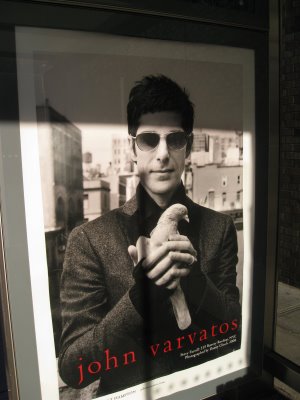
John Varvatos has successfully blended his lifelong love of music with his fashion career.

He cut his teeth in the fashion industry in 1983 with Polo Ralph Lauren. In 1990 he moved over to Calvin Klein, where he launched their menswear line. For the past several years he has held key design and marketing positions with Polo, London Fog and Nautica. In 1999, Varvatos started his eponymous company, debuting his first clothing line for Fall/Winter 2000. He has received numerous honors from the Council of Fashion Designers: 2000 New Menswear Designer of the Year, and 2001 and 2005 Menswear Designer of the Year. In 2007 Varvatos was named GQ Magazine’s Designer of the Year

John credits rock ‘n’ roll for his early interest in fashion. His first fashion/rock campaign featured Ryan Adams in 2005. John has since showcased in his campaigns Joe Perry, Iggy Pop, Chris Cornell, Alice Cooper, Velvet Revolver and Cheap Trick.

I recently caught up with John to discuss the new happenings with his company, 315 Bowery, which opened in the former CBGB’s, as well as who’s playing this year’s Stuart House event.

Rollo & Grady Interview // John Varvatos

R&G: 2008 was a busy year for you. Can you tell me a little about it?

John: Well, we opened up three new stores – the Bowery in April, in the old CBGB’s location, San Francisco in May, and Malibu in September. So we’ve had three openings, a fragrance launch and a lot of new, exciting things happening with the company. It’s been a very busy year for us all the way around.

R&G:
You generated some controversy when you opened up the store in the former home of the famed music venue CBGB’s. Tell me about that experience.

John: We definitely had some controversy when we announced that we were taking the space. It had been empty for over a year-and-a-half before we leased it, so it wasn’t like we forced anybody out. There were a handful of protesters the first few days we opened, but the controversy went away very quickly. Even The Village Voice was surprised at what we executed in the space. Most of the music world came out and supported us, including a lot of musicians that played there – members of Blondie, the Dictators, Little Steven and C.J. Ramone. We don’t use the name CBGB’s anywhere and we don’t imply that the store has anything to do with it, but we do our best to honor the past. We have a permanent stage set up with an amazing P.A. system, and the first Thursday of every month we have a free concert to promote up-and-coming artists that have a hard time getting labels behind them or the labels don’t give them the money to get out there. We support this through our artist development fund. And all the kids who work in the store are musicians.

R&G: You sell vinyl and memorabilia there, so you consider it a concept store. It’s a lot different from your other locations. How have people reacted to the combination of merchandise?

John: The original protesters complained about how expensive the items are. The reality is that although there are some expensive things, there are inexpensive things, as well. Fashion has always been a big part of the history of rock and roll. A lot of people are interested in the way bands dress and what they look like in their videos and album covers. We haven’t tried to exploit it, but I still have to pay the rent, so I have to sell things. And I want CBGB’s, its history of being a place for artists to get their start, to somehow remain in New York City. That’s why I use some of my profits to support up-and-coming artists. The reason you have your blog is exactly the reason I have that store. Would I love to own a club? Yeah. But for right now, this is what I’ve got. You don’t have to pay to come into the store. You can spend two hours just looking at all the memorabilia and the original walls from CBGB’s, and nobody is going to bug you. It’s like a museum in that way.
Rollo & Grady Interview // John Varvatos


February 6th, 2009

Rollo & Grady Interview // Nic Harcourt

Rollo & Grady Interview // Nic Harcourt
Nic Harcourt is arguably the most famous DJ in the world. He was born and raised in England and lived in Australia before moving to the United States. He landed his first radio gig doing fill-ins, with no prior experience, at WDST in Woodstock, New York. Before long, he was running a daily show and programming the station.

When the slot opened up for Morning Becomes Eclectic at KCRW in Santa Monica, Harcourt landed the job after an nationwide search. At both WDST and KCRW, Harcourt earned the reputation of spotting talent way ahead of the curve; he’s regarded as the ultimate “tastemaker” in music and was an early proponent of Coldplay, Dido, Damien Rice and Moby to name a few.

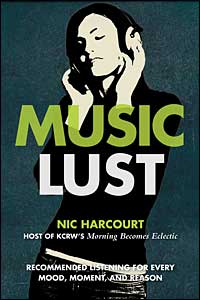
He stepped down from Morning Becomes Eclectic and as the station’s music director last Thanksgiving after a 10 year run to build his own business SamLuna Media. He won’t be splitting from the station completely; he’ll continue to do 3 hour Sunday evening show. Harcourt has already earned credits as a music consultant or music supervisor for several movies and television shows and in 2005 completed his first book, Music Lust, a collection of essays about popular music.

I caught up with Nic recently to discuss SamLuna, radio, music and where it’s all heading.

Rollo & Grady Interview // Nic Harcourt

R&G: How does it feel to be retired from Morning Becomes Eclectic?

Nic: How does it feel? I have mixed feelings. I went to the same place every morning for 10 1/2 years, so it takes a little bit of adjusting to, but it’s good. It was time for me to move on and do some other stuff.

R&G: Prior to coming out to Los Angeles from Woodstock, did you realize the traffic conditions here would present an opportunity for you to reach a captive audience?

Nic: I don’t think you can ever really know what you’re getting into whenever you take any job, to be honest with you. But, my market before L.A. was Poughkeepsie. I think that market is 150-something, so there’s a big difference, obviously.

R&G: You were considered a tastemaker before you came to Los Angeles. When did you feel like you earned your stripes at KCRW?

Nic: I don’t know. People started telling me that I was a tastemaker. I never really thought about it. I moved to L.A. because it was an opportunity for me to do something different and to move on in my career. To be honest with you, before I left Woodstock I was happy where I was. I was at a small independently owned alternative station. I was the morning guy, the music director, the program director and the promotions guy. I had a lot of stuff going on there that was keeping me busy. It wasn’t until people started taking notice of some of the stuff that I was doing in L.A. when they started saying, “You’re a tastemaker now. How does that feel?” I was like, “I don’t know. I’m just doing my thing.”

R&G: Was Coldplay your first major discovery?

Nic: I think so. Before Coldplay, we played Dido before her album came out. That was probably the first year I was at KCRW. She didn’t really break through until a year or so later. I think she broke through before Coldplay, if memory serves me correctly. I’ve learned, in hindsight, not to say we were first because there’s always somebody that’s going to be pissed off when you say that. When I was hosting Morning Becomes Eclectic, we were way early with people who went on to fame like Travis, Norah Jones, Dido and Damien Rice. A lot of that stuff happened somewhere between 1999 and 2003.
Rollo & Grady Interview // Nic Harcourt


February 5th, 2009

Rollo & Grady Interview // Seth Godin

Rollo & Grady Interview // Seth Godin

Business Week has called Seth Godin “The Ultimate Entrepreneur for the Information Age.” He’s the author of 10 international bestsellers and is considered the top marketer in the Digital Age. His e-book Unleashing the Ideavirus was downloaded more than 2 million times before it was published. And his blog is consistently ranked one of the top 20 in the world by Technorati. Through his writing and speaking, Seth has changed the way people think about marketing, change and work.

Seth graduated from Tufts with majors in Philosophy and Computer Science and received his MBA from Stanford. In 1992 he founded Yoyodyne, one of the first online marketing companies. He sold Yoyodyne to Yahoo! in 1998 and became its VP of Direct Marketing.

In 2005 Godin founded Squidoo, a free, interactive, easy-to-use site allowing anyone to create pages (called lenses) about topics in their expertise.

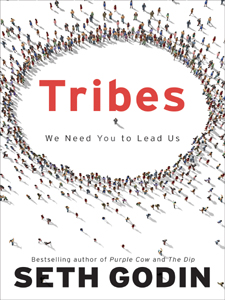
I recently caught up with Seth to discuss his latest book Tribes and how its concepts apply to the music industry.

Rollo & Grady Interview // Seth Godin

R&G:
What’s your take on the state of the music industry today?

Seth: The music industry is really focused on the ‘industry’ part and not so much on the ‘music’ part. This is the greatest moment in the history of music if your dream is to distribute as much music as possible to as many people as possible, or if your goal is to make it as easy as possible to become heard as a musician. There’s never been a time like this before. So if your focus is on music, it’s great. If your focus is on the industry part and the limos, the advances, the lawyers, polycarbonate and vinyl, it’s horrible. The shift that is happening right now is that the people who insist on keeping the world as it was are going to get more and more frustrated until they lose their jobs. People who want to invent a whole new set of rules, a new paradigm, can’t believe their good fortune and how lucky they are that the people in the industry aren’t noticing an opportunity.

R&G: Are you saying that the technology players like The Hype Machine, Last.fm, MOG or Pandora are taking advantage of the new paradigm?

Seth: I would go to even smaller places. I would talk about the folks who started CD Baby. I would talk about musicians who are making a great living leading a small tribe – 1,000 true fans connecting directly with each other, leaving out many layers of middlemen. I would talk about powerful musicians like Neil Young who are moving things in one direction, versus powerful musicians who are just sitting back and watching the whole thing fade away.

R&G: Can you give an example of a powerful musician or a super-group that’s missing the boat?

Seth: We saw both Metallica and AC/DC take interesting paths when it came time to figure out how to generate new generations of fans, when it came time to play with distribution, etc…

R&G: Going with Best Buy or Wal-Mart?

Seth: Yeah. A Wal-Mart deal seems really sexy, but you’ve got to figure out who you are reaching and what is it doing for you in the long run. Suing your fans is an interesting approach to maintaining the status quo, but there’s no evidence that it leads to long-term benefits. There are musicians who are reaching out and building fan bases and then there are those who are fighting the other direction. I went to see Ricky Lee Jones live in New York City a couple months ago. At the end of the concert they stood up and said, “If we get your email address at the front of the room, we will email you a live recording of tonight’s concert when it’s ready.” 72 hours later, there it was. The idea that you could have a micro-market of 250, 500, 1,000 copies of a CD every night is a totally different way of thinking about what you do for a living, rather than making one album a year marketed with payola and promotion that reaches a certain group of people and ignores everybody else.
Rollo & Grady Interview // Seth Godin


February 3rd, 2009

Rollo & Grady Interview // Peter Rojas of RCRD LBL

Rollo & Grady Interview // Peter Rojas of RCRD LBL

Peter Rojas is one of the world’s most famous bloggers. He’s also a magna cum laude graduate of Harvard and received his Master’s in Critical Theory at the University of Sussex in England. Before his launch into the blogging business, Rojas worked in his native California for Red Herring Magazine until he was laid off after the dot-com bust in 2001.Then he moved to New York City where things started changing for him. Quickly.

In 2002 Rojas started Gizmodo and in 2004 he was hired by Weblogs, Inc., the world’s largest blog network, to start Engadget. Both Gizmodo and Engadget are focused on consumer electronics for the tech-savvy and quickly became the two most successful blogs ever. Not long after his arrival at Weblogs Inc., Rojas was made Chief Strategy Officer and when AOL purchased them in 2005, blogs became further validated as a viable revenue stream. The sale also made Rojas a “blog-millionaire”.

In November of 2007 Rojas moved to combine his two passions, technology and music, to launch RCRD LBL with Downtown Records. RCRD LBL has taken a completely different approach to the music business; it’s an online record label that offers all digital, all-free MP3’s for streaming or download that are DRM free. It’s a powerful combination. Since then he has quickly emerged at the head of the pack, leading the music industry towards a new and more progressive business model. While that model is clearly still being defined, RCRD LBL is breaking new ground and signing emerging and established artists including Dinosaur Jr., Public Enemy, Moby, Spoon, Dead Confederate, Bon Iver, White Denim and the Felice Brothers.

Rollo & Grady Interview // Peter Rojas of RCRD LBL

R&G: You started two of the most popular and successful blogs of all time: Engadget and Gizmodo. They are tech focused. What inspired you to move into the music space with RCRD LBL?

Peter: Music is something that I have always been interested and involved in since I was young. I ran my college radio station, was in bands, put out records and set up shows. So I was really passionate about music but dismayed at how screwed up the industry had become since the introduction of Napster and how poorly the industry has adjusted to the new realities of the online world. My perspective was that music and the music business were going to fragment in all sorts of different ways, and that there would be an opportunity to approach online music from the angle of blogging. Music blogging had become this really exciting space for music discovery, for breaking and discovering bands in the way that radio and labels used to do. It seemed like you could build something, like an online music property, that approached things from the perspective of online or niche media, which is what blogging is all about. I took a lot of those lessons from blogging myself. When I started Engadget I worked very closely with Weblogs Inc. to develop that network. It had a huge swapping site covering all sorts of topics in addition to technology-specific stuff, so I felt like I had a sense of what it would take to build something.

R&G: When you started reading music blogs, did you realize that the best blogs have less clutter and are easy to navigate?

Peter: The key is that blogs are a great platform for delivering up content of any kind. Whether it’s video or audio through a podcast, or news or commentary, a blog is a format that people are really comfortable with because they know how it works. They know that they’re going to get the freshest content at the top. They know that they can subscribe to an RSS feed and get new content delivered to them in a format they understand. I think music blogs have done an amazing job of revitalizing music discovery.

R&G: You guys are a little over a year old. How many artists do you have on your roster right now?

Peter: Oh man, I think we’ve worked with well over a thousand different artists at this point and in a variety of capacities. We’ve done one song with some artists and multiple EPs with others. There’s a wide spectrum of stuff, but what’s really nice is that we have so much flexibility in what we can do. We can do something with Moby, who’s already signed to EMI, because we offer him a really flexible, easy-to-work-with platform for getting the music out there.
Rollo & Grady Interview // Peter Rojas of RCRD LBL


January 28th, 2009

Rollo & Grady Interview / Matty McLoughlin Of The Soft Pack

 Rollo & Grady Interview / Matty McLoughlin Of The Soft Pack
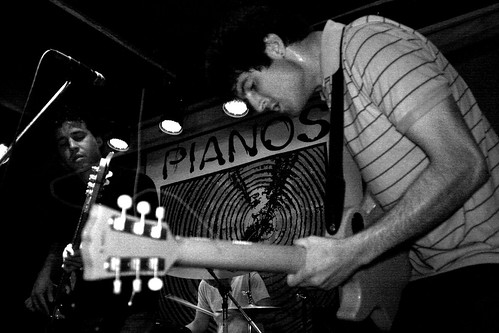
Matty McLoughlin (r)

I recently met with The Soft Pack (formerly known as The Muslims) backstage at the Echo, where they opened for Darker My Love last month. The band told me that they had started a “new chapter” when they renamed themselves The Soft Pack. Some fans expressed disapproval, but the old name had brought out a dark and sometimes racist side of listeners and critics. I interviewed Matty McLoughlin (lead guitar) for the piece and got the chance to hang out with the band, which includes Matt Lamkin (lead singer/guitarist), Dave Lantzman (bass), and Brian Hill (drummer).

The Soft Pack originally hails from San Diego, but recently moved here to Los Angeles to get themselves more in the mix. You can tell that Matty and his fellow bandmates are good friends; they’re a laid-back, tight-knit group. They’re all super talented as they effortlessly play their unique blend of pop-punk-garage rock n’ roll.

Since I met with Matty and The Soft Pack they have signed with New York-based Kemado Records. They were one of the hottest bands at last year’s SXSW and CMJ festivals and the industry buzz they generated there is what led to the deal. You can expect their debut album with Kemado late next year, and until then they’re playing some of their new tracks on tour. You can catch them at The Echo tonight (1/28) and again on February 4th & 13th.

R&G: Tell me a little bit about the name change. How did that come about?

Matty: I think we officially changed it around Thanksgiving. We had wanted to change it for about a year now, but hadn’t come up with anything that we could all agree upon. Brian came up with The Soft Pack, and we liked it a lot, so we changed it. We were sick of the shit people would say about the old name. I guess they were trying to be funny and some things that were said came off as racist… It just became fucking stupid.

R&G: Journalists or fans?

Matty: Everyone in general. Anybody on the street asking about our band’s name, everything about it became a nuisance.

R&G: Why The Soft Pack? After cigarettes?

Matty: It sounded really good. It’s neutral. That’s why I like it. It doesn’t mean anything; it doesn’t matter.

R&G: Were you worried about the name change, in terms of alienating the fans that you’d already made with The Muslims?

Matty: No, I wasn’t. Some people got upset, but it’s their choice to not follow the band anymore. It was our choice to change our name. If you don’t want to listen to our music because you only liked our name, it’s cool with us.

R&G: Did the Velvet Underground and the Strokes influence your brand of music?

Matty: We grew up listening to the Velvet Underground in high school. I like the Strokes; good pop music. Their first record had some pretty awesome songs on it.

R&G: Tell me about your first recordings.

Matty: We recorded with our friend Ryan at 1928 recordings. It was our first EP, which is seven songs and it comes in a CD with three bonus tracks. Then we released a 7-inch with Sweet Tooth Records in San Diego, that’s where we’re from. And then, we released a 7-inch with I Hate Rock and Roll, which is an LA based label.

 Rollo & Grady Interview / Matty McLoughlin Of The Soft Pack


January 26th, 2009

Rollo & Grady Interview :: Jessica Lea Mayfield

Rollo & Grady Interview :: Jessica Lea Mayfield


Jessica Lea Mayfield
is wise beyond her years. At the age of 19 she has already released two albums (White Lies, 2005 & With Blasphemy So Heartfelt in September, 2008) in her own distinct folk-indie-country rock style and is set to record more.

Mayfield was home-schooled in her native Kent, Ohio and started playing in her family’s band, One Way Rider, at the age of 8. She’ sings her sad, dark songs about love and heartbreak with an unmistakable drawl. I listen to Mayfield almost daily, it’s hard to believe that she started writing the tracks on With Blasphemy So Heartfelt at 15 and 16 years old. But, her voice is so beautiful it makes you look past it all. I haven’t been this excited about a musician in a long time.

Jessica Lea spent two years producing With Blasphemy So Heartfelt with Dan Auerbach, lead singer of the Black Keys, who also played guitar, piano, organ, drums and lent vocals to some of the tracks; also a signal of Auerbach’s own rise as a talented producer. Mayfield was the first guest to appear on a Black Keys album (Attack & Release) on the “Things Ain’t Like They Used To Be” track.

As Scott Avett of the Avett Brothers said “With the edge and attitude that Kurt Cobain possessed coupled with a rich musical family history similar to Maybelle Carter’s, Jessica Lea Mayfield is the most exciting new artist on the scene today.”

img_9522-desktop-resolution []

R&G: Your songs are extremely personal. Have you always been comfortable singing in front of strangers?

Jessica Lea:
It is what it is. I used to feel uncomfortable. Now, it’s something that I kind of got over. It’s a good thing. It’s a way to lift some weights off my chest and get out there and bare my soul.

R&G: How old were you when you wrote the lyrics to the songs on With Blasphemy So Heartfelt.

Jessica Lea: I wrote most of the songs when I was 15 and 16.

R&G: You’re 19 now. Why did it take you so long to record the album with Dan?

Jessica Lea: We were both just busy, and it started with just recording for fun. We had met and just started recording some of his songs, then some of my songs. We’d meet up and hang out and try out new stuff and some covers. One day he was like, “Hey, I think we should make you an album.”

R&G: Do you still speak to the guy or guys that you sang about on the album?

Jessica Lea: I’ve had a few boyfriends. Some of them I do talk to; some of them I don’t. I’m usually the one who cuts things off. No one has ever broken up with me, so a lot of times they will IM me or send me a MySpace message like, “Hey! How are you doing? Do you want to hang out?” They’re always still trying to hang out with me, and I’m just, “No thanks, but how are you doing? How’s life?” I probably only have one boyfriend out of the history of my boyfriends that I don’t talk to at all.

R&G: What have you learned touring on the road?

Jessica Lea: It’s just really hard. The most taxing thing about it is the constant routine. It drives you crazy when you’re on the road and you can’t wait to get off. But as soon as you’re home, you don’t know what to do with yourself. Its sound checks for the shows and hotels. Sound check, show, hotel; I was just on the road for five weeks, and that’s the routine. When you get home for two weeks, you spend 30 minutes trying to figure out what to make for dinner. You have all this free time. You don’t know what to do with it.

R&G: So you’re ready to get back on the road?

Jessica Lea: Yeah, I’m ready. As always, it’s the only thing that I really know how to do, and it’s what I’m used to. It’s my life, and I love it. I love getting to see tons of different places and venues, making friends and discovering new bands. That’s how I get half the new music I listen to, by touring with a band.

R&G: You cite the Foo Fighters as a musical influence. Do have plans to put out a rock ‘n’ roll album?

Jessica Lea: They were a huge influence on me. When I was a kid, I saw the music video of “My Hero” and I was like, “That’s what I want to do.” That’s what got me into music. My family played bluegrass, so I played with them just because I really wanted to play music. I write rock songs first and then they turn into what they are. I play them acoustically, but a lot of times when I write songs I hear big huge rock drums and electric guitar. I hear all these things for it, and then I end up scaling it down and shifting it down. It turns out to be really cool. I will probably release some upbeat rock stuff in the future for sure.

R&G: Rock ‘n’ roll would have taken away from your flow on your recent album
.

Jessica Lea: Yeah, it would have. That has a lot to do with Dan. He’s got that real laid back vibe in his style. He’s great to work with.

R&G: Did you get to meet Danger Mouse?

Jessica Lea:
Yeah. Brian is a really nice guy. I love what he did with the Black Keys album. It’s my favorite album of theirs. I like everything they’ve done, but it’s such a good album. It’s different from their previous work, and I like that.

R&G: Your songs are dark and haunting. It seems like everything’s going well in your life, so is it hard to continue writing dark songs when you are happy?

Jessica Lea: I think that I’m naturally in a dark place. I’m just one of those people who have a dry mindset. I look at everything from the rawest point of view possible. I always see the bad sides of things. I guess you could say I’m a realist. I’m not really that much of a daydreamer. I don’t get my hopes up about things until I’m doing them. If someone’s like, “Oh, you’re going to get to do this,” I’m not excited about it until I’m doing it. I’m that kind of person. I think a lot of people think that because I’m friendly and nice then I must always be happy.

R&G: You’re friendly and outgoing?

Jessica Lea
: I’m a very open person. I love meeting people, but I’m not always happy. I try to be. When I meet people and they hear my music, and I’m upbeat, they’re like, “Wow, you sound so happy, so upbeat!” I say, “I’m having a conversation right now with someone I don’t know. Oh yeah, life sucks.”

R&G: Did you catch the CSI episode that featured “Bible Days”?

Jessica Lea: No, I didn’t. Most people I know accidentally saw it, but I don’t even watch TV. There’s no chance in me accidentally watching it.

R&G: I’ve never seen the program, but it’s apparently popular.

Jessica Lea: It’s my best friend’s favorite TV show. I just got this text message that was like, “CSI?” and then “WTF?” I was like, “I forgot to tell you!”

R&G: It’s mind-blowing to think that 15 million or more people watch that show.

Jessica Lea: When stuff like that happens, you don’t really notice it. Other people think that I’m having this great success. Everything is just going slow, on my side of it.

R&G: Have you written any new songs?

Jessica Lea: I write all the time. I have some new material that I’m excited about.

R&G: When do you think you’ll record your next album?

Jessica Lea: Sometime in the next few months. I’ve got enough songs for a few albums, so when I have the free time I’ll probably record with Dan. So when Dan has the free time, we’ll lay down some tracks.


September 5th, 2008

Jenny Eliscu :: Contributing Editor – Rolling Stone Magazine

Jenny Eliscu :: Contributing Editor   Rolling Stone Magazine

When I was at this year’s Lollapalooza in Chicago I met Jenny Eliscu.

Jenny has been with Rolling Stone for almost 10 years where she’s gone from a young writer to her current role as one of the magazine’s contributing editors. She’s the author of Schools that Rock: The Rolling Stone College Guide. When she is not writing and traveling to festivals, she hosts Left of Center on Sirius Satellite Radio.

We had a great talk and discussed everything from her coverage of the Napster trial, George Harrison, Amy Winehouse, tequila shots and the current state of music business.

R&G: How did you get your start with Rolling Stone?

Jenny: I started off at a consumer magazine called the CMJ New Music Monthly and after 5 years was looking for anything at a real magazine. I interviewed for a job at Details that I didn’t get because I was supposedly “over-qualified”, which is hardly flattering when you’re like, “No. What do you mean? I’ll take it!”. I remained in contact and became friends with the guy who interviewed me. I didn’t know it at the time, but he had worked for rollingstone.com and when a position opened up he recommended me for it.

R&G: What was his name?

Jenny: Rob Levine. He’s a fantastic dude and responsible for a great deal of my career thus far with that one simple gesture.

R&G: When did you start writing for the magazine?

Jenny:
I had been at rollingstone.com for maybe two weeks when my current editor, Jason Fine, came down and asked me to go to Woodstock ’99 to do a story for the magazine about this doctor who was setting up a psychiatric triage for kids who were tripping on whatever they tripped on in 1999. So I was like, “What? First of all, I’m going to Woodstock ’99? Second of all, I’m writing a story for Rolling Stone Magazine? What the fuck?”

R&G: That’s a major story for your first article.

Jenny: Yeah! Oh my God, totally! I had no idea. I look back now and I know I felt very humbled by the experience, but I don’t think I knew what the hell I was doing. I could do it so much better now; obviously. This entire summer I’m going to festivals, and now it’s stressful since I’m covering them. But I know what I’m doing now. Whereas Woodstock ’99 was a literally trial by fire.

R&G: I’m interested in how technology is disrupting the music business. You covered the Napster trial. Did you or anyone you interview foresee the impact that Peer to Peer Technology (P2P) would have on the music industry today?

Jenny:
Oh no…definitely not. I have to say that when the initial Napster story broke, it had reached a point of being a mainstream issue where everybody was using it. When Metallica and Dr. Dre decided to sue Napster, it was obvious that something big was going to happen that seemed like it would change everything.

R&G: But didn’t it blow your mind at the time? Did you think that the labels, with all the money they had, might be able to get rid of this type of “uprising”?

Jenny: It’s hard to say. I really wish I could look back on that with 20/20 vision. I’m not skirting the issue by being journalistic, but you can’t be too convinced you know what’s going to happen next, or you lose your engagement with the topic. The other thing is that nobody fucking knew what was happening. Every issue, I would do a story on Napster and I would interview experts and various execs in the music business. I was talking to Jimmy Iovine about what this Napster thing was going to do and asking Dr. Dre why he’s suing Napster. Everybody had different ideas. For a while, it was, “It’s going to be the universal jukebox where you can stream any song you ever wanted to hear online in an instant, high quality audio, so why would anyone need to download anything.” Then other people would say, “Oh, it’s all going to be downloaded. Nobody wants to stream. They want it on their hard drive.Then the iPod came out. Nobody saw that coming. Nobody fuckin’ saw that. It came up from behind. All the shit that people postulated would happen, none of it happened, and now Apple rules the music business.

R&G: Do you think Steve Jobs is good for the music industry?

Jenny: Definitely. Steve Jobs is great. Even if he does what he does for purely mercenary reasons, he is just a good capitalist. Shaking things up is better for music. Anybody who comes in and fucks shit up is great for the industry.

R&G: Where do you see the music industry in the next five years?

Jenny:
Well, if I’ve learned anything in covering this stuff, it’s not to make any predictions.

R&G: But make one.

Jenny: Five years ago, the landscape for digital distribution and music was really not that different from what it’s like now, but obviously, five years prior to that it was very different. I think the personal electronic side of things is really in its biggest boom right now. Some “smart” opinions are that wireless companies might start buying/investing in record labels.

R&G: With all these potential business models the consumer ends up losing out on music at some point. It’s going to be tough to get all of your music in one place.

Jenny:
I totally agree with you. That’s bad for music, and when it’s bad for music, consumers respond by not buying as much of what you’re putting out there. It’s almost impossible to transition into any of these potentially viable models until the publishers of songs start loosening their hold on the purse strings a little bit. You can’t have this competition where only this label’s songs are available here on this download site. Give the customers what they want.

R&G: What do you think of music blogs breaking stories “real time” before the magazines can report on them?

Jenny: When well executed, they are a great thing. I do think that, as a writer, clearly the first two things that suffer are writing and reporting in those instances. So you have a lot of false information that people take as true because it’s presumably a news source when it’s not; it’s a blog, and so that is unfortunate. From a Rolling Stone standpoint, that’s not what we do. We offer a more expert and thoroughly written look at the stories we report and think our readers care about most.

R&G: So you guys have to move faster on your deadlines to get the magazine out?

Jenny: We come out every two weeks, so we have very short lead times. In response to the popularity of blogs and even YouTube and stuff like that, we have to reconsider how we cover things like the Video Music Awards because where it falls in our production cycle, it could be old news with all the good jokes made and the insights insighted.

R&G: Which major artists have you interviewed?

Jenny: I’ve had extensive series of interviews with Pete Townsend, and I’ve interviewed George Harrison on the phone once.

R&G: You spoke to George Harrison right before he passed away, correct?

Jenny: Shortly before, yes.

R&G: When you talked to him, did you know he was ill?

Jenny: No, he seemed fine. He had a new record coming out, Brainwashed, which ultimately ended up being his final album, released posthumously. He was promoting it when I spoke to him. There was a buzz of activity around him, which was the only reason I was able to get the interview. I was so nervous; it was like 11:00 in the morning and I’m not much of a drinker, but I had some airplane bottles of tequila and I downed two of them before we spoke.

R&G: Nothing wrong with that. Was there something that you came away with during that conversation that you didn’t expect?

Jenny: It was easier to talk to him than I thought it would be. It all made sense when I got off the phone with him. He knew how to guide the interview. He was very professional. He knew what he wanted to talk about and I knew clearly what he wanted to talk about and I have never been one to take advantage of my access to ask things that I don’t think they’d be prepared to answer. It’s like, George frickin’ Harrison agreed to talk to me. I’d always thought that he’d be an amazing person and he was.

R&G: You’ve interviewed Mariah Carey, Christina Aguilera, Britney Spears, and Amy Winehouse. How did you become the diva interview lady?

Jenny: There are very few women who write for Rolling Stone. There have been times over the years where I have been the go-to if they wanted a woman interviewed by another woman.

R&G: When you are sitting in Mariah Carey’s apartment or wherever the hell you are, do you feel like you’re on Pluto?

Jenny: Yeah, but that’s the fun part. Either you feel like you’re on Pluto – and that’s fun – or you feel like wow, I really don’t feel like I’m on Pluto. Isn’t this interesting? Those three women are all different cases, and I can’t really speak much to Christina Aguilera, but she’s a lot smarter than anyone would expect or give her credit for and I liked her quite a bit. And Britney Spears, I love Britney.

R&G: When you interviewed Amy Winehouse, did you see any hints that she was messed up?

Jenny: There was just an element of drama to her from the “go”. I just had a feeling that this girl was going through some shit. It’s not controversial to acknowledge that Amy Winehouse has some kind of substance abuse problem.

R&G: You saw her at a monumental point in her life that foreshadowed where she is now and how we perceive her through the media…

Jenny: I couldn’t believe it when I met with her the first day in Toronto and they (Winehouse & Blake Civil-Fielder) had this explosive fight. She was hysterical and like a week later in Miami, I was supposed to hang out with her/them that morning and her publicist calls me to say that they needed to reschedule the interview for later. Then I get a call from my office and since we also publish US Weekly someone there tells me, “Oh, did you hear that Amy Winehouse got married?” That was how I heard. I was in the same city as her, waiting to do an interview with her, and found out that she got married.

R&G: Were you pissed that you weren’t a bridesmaid?

Jenny: [Laughs] I was like, “What the fuck? What do you mean she got married?” They postponed my interview so that they could go get married? I was like, when last we met, they were in a big dramatic fight. This is brilliant. You can’t make this shit up. It’s the best when you can’t make the shit up.

R&G: You did a piece on Band of Horses for Rolling Stone’s 2007 Hotlist.

Jenny: Yeah, I did a feature on Band of Horses – who, I think are fantastic – I was not a major fan of their first record, but their most recent [Cease To Begin] – the one I did that story on – I think is an incredible record and I’m kind of surprised that it didn’t do better. I think My Morning Jacket (MMJ) are more skilled but I certainly think that a larger portion of MMJ fans should be Band of Horses fans.

R&G: Do you like MMJ’s new album [Evil Urges]?

Jenny: Totally.

R&G: It’s great when a band takes a risk and tries something new and interesting.

Jenny: I think one of the most salient points about My Morning Jacket is that their success demonstrates that those generalizations about people having bad taste, are not entirely true. You see a band like MMJ playing Madison Square Garden on New Years’ Eve, and especially as a New Yorker, that’s significant; that’s not lost on me. It’s like, “Really? Oh my god!” Not only good for them but good for you guys, buying those tickets. I mean, I think MMJ are amazing and I think they have always said, “We’re not just one kind of band.” They continue to demonstrate that and I appreciate it.

R&G: How about the Strokes, are they going to put out another album?


Jenny
: Yeah! I can’t say exactly when, but I do believe there’s going to be some new Strokes activity early next year.

R&G: Thank you–you’ve been great.

Jenny:
You’re lucky I’m not giving you hell over your Kings of Leon text messages from earlier.

R&G: I am what? Lucky? [Laughs]

Jenny:
You’re lucky I’m not giving you hell over your schlagging the Kings Of Leon.

R&G: Yes, I did schlagged them. I saw them at the The Greek Theatre [Los Angeles] – and they killed it. They are still one of my favorite bands, but it looked like they spent an hour and a half on their hair and the clothes before the show. They’re a southern rock n’ roll band and they have perms and makeup on.

Jenny: First of all, this is rock n’ roll, baby! Would you complain if David Johansen took too long putting on his fucking eyelashes for the New York Dolls? Who cares?

Further Reading:
The Troubled Homecoming Of The Marlboro Marine – Jenny Eliscu